Updated November 7, 2025 11:43AM
If you buy through our links, we may earn an affiliate commission. This supports our mission to get more people active and outside.Learn about Outside Online's affiliate link policy
The 6 Best Climbing Approach Shoes (Updated Fall 2025)
Tested on long hikes, sketchy scrambles, and alpine missions—these are the approach shoes that can do it all.
(Photo: Chris Alcocer)
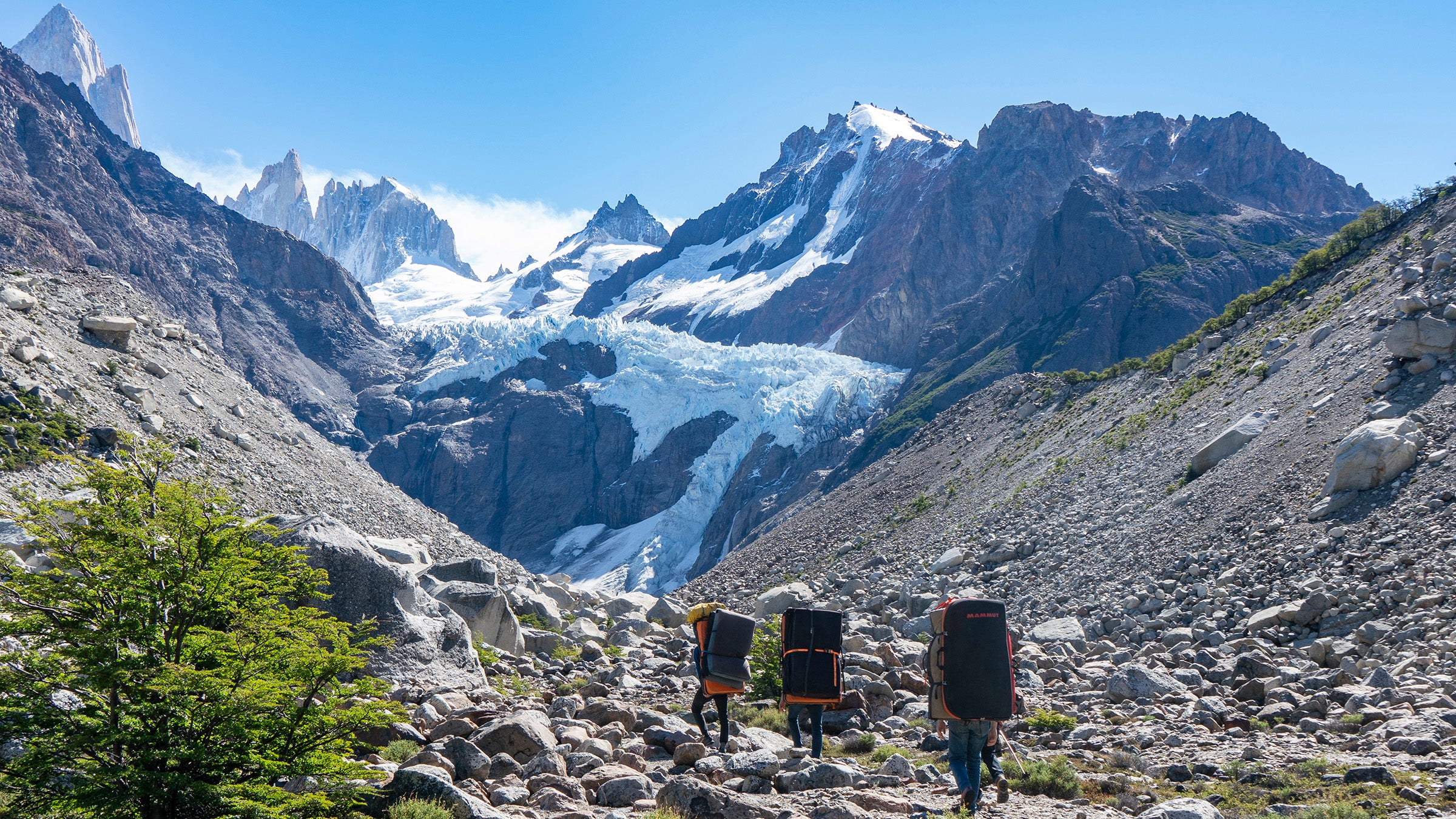
The best rock climbing shoes in the world aren’t going to do you any good if you can’t reach your route in the first place. Sure, some climbs are a stone’s throw from the car, but others require fourth or fifth-class scrambling to reach the first pitch. And even when a climb does have an easy approach, the descent could involve rappelling, scrambling, downclimbing, or several miles of hiking.
That’s where approach shoes come in. Approach shoes are supportive, sticky shoes designed to perform both while hiking trails and climbing rock, and to look good while doing it. From backyard crags to backcountry alpine, the best approach shoes will propel a climber anywhere they need to go.
Every year, our testers consider the best approach shoes on the market—both reliable longstanding favorites and cutting-edge newcomers—and dive into hikes, scrambles, and climbs around the planet. Here are our six favorite approach shoes of 2025.
Updated November 2025: We added three new approach shoes to this list—the Black Diamond Technician Pro, the Salewa Wildfire NXT, and the Scarpa Rapid XT. We’ve also updated pricing and info on models tested in previous seasons that are still highly recommended.
Best Approach Shoes: At a glance
- Best All-Around: Arc’teryx Vertex Alpine ($230)
- Best Value: Butora Mousai ($135)
- Best Climber: Black Diamond Technician Pro ($199)
- Best Hiker/Runner: Salewa Wildfire NXT ($189)
- Best for Cragging: Scarpa Rapid XT ($179)
- Most Durable: La Sportiva TX4 EVO ($189)

Best All-Around
Arc’teryx Vertex Alpine
Weight: 11.8 oz
Size Range: US 7-13 (men’s) / 5-10 (women’s)
Heel-Toe Drop: 8 mm
Pros and Cons
+ Precise fit
+ Stellar grip
+ Good hiker
+ Stylish
– Expensive
– Narrow fit
If you aren’t worried about the price, the Vertex Alpine is as good as an approach shoe gets. Tester and Climbing magazine’s Senior Editor Anthony Walsh calls this model “a one-shoe wonder, threading the needle between runner and approach shoe.” The Vibram XS Flash 2 sole is built for edging, and also has a flat, smearable toe. Thanks to a lacing harness that dials fit down over the forefoot, the Vertex Alpine is a very supportive climber, capable of high-precision footwork.
The performance doesn’t stop when you hit the trail, either. A cushioned sole and rockered design power through fast hikes. Our testers appreciated the Vertex’s stretchy, sock-like knit collar, which keeps out gravel and other debris without making the shoe hard to put on. The shoe is made with a Matryx upper, which is made with high-tenacity polyester coated with polyurethane and a blend of technical yarns like aramid fiber and Kevlar. Our test models showed minimal signs of wear after 100-plus miles, taking on everything from friction-y 5.8 alpine scrambles to 30-mile hiking approaches. The Vertex Alpine also gets points for style—both our male and female testers called it the best-looking shoe in their quiver.
ADVERTISEMENT
Downsides include a high price ($230) and a narrow, almost rock-shoe-like fit that—while great for climbing—may not be comfortable for wide feet. Walsh noted that the shoe stretched enough to become comfortable after a few wears, though he recommended keeping the forefoot’s laces totally slack and only tighten around the ankle unless you’re actually climbing.
(The Vertex Alpine also performed well in other arenas. It even got Walsh into a high-end nightclub with a strict dress code in Las Vegas. “The Vertex Alpine passed the vibe check,” he said, “and the cushioned, rocker sole provided plenty of comfort for hours on the dance floor.”)
Read our in-depth review of the Arc’teryx Vertex Alpine here.
ADVERTISEMENT

Best Value
Butora Mousai
Weight: 1 lb (unisex)
Size Range: US 5-13.5 (men’s) / 6-11.5 (women’s)
Heel-Toe Drop: 5 mm
Pros and Cons
+ Comfortable on trail and rock
+ Around-town style
+ Very affordable
+ Highly versatile
– Subpar technical performance
The Butora Mousai nails the balance between affordability, comfort, and performance, with a cool skate-inspired look. This unisex shoe was our “most versatile” pick in 2024, and even though some newer models have surpassed it in versatility, I kept it in the mix, partially because of its very reasonable pricing ($135), and also because out of all the shoes I tested last year, the Mousai is one I still wear every week, proving you don’t have to spend $200 for a durable approach shoe.
While shoes like the Vertex Alpine, Wildfire NXT, or Black Diamond Technician Pro are a better choice for climbers or hikers looking to maximize performance, the overwhelming majority of us don’t need an approach shoe to climb 5.10 or hike 25-plus miles into the backcountry. We need something breathable and comfortable that looks good, smears well, and doesn’t break the bank. That’s the Mousai.
ADVERTISEMENT
There’s no break-in period with this shoe, and they’re comfortable on moderate trails. It’s more of a slabby, friction-based shoe, too roomy for great precision and too soft to stand on fine edges, but the sensitive, pliable midsole, and grippy NEO Fuse outsole still gets the job done on easy rock and approaches. “It’s a great shoe for putting up easy top-ropes for friends or kiddos, and it does well approaching on slabs or easy fifth class,” reported past tester Kelsey Brassuer, a climber and ultrarunner based in Carbondale, Colorado.
Brasseur also praised the shoe’s comfort, noting it fit well out-of-the-box and true to size. The suede upper is burly but soft, and the padded mesh tongue is breathable. I’ve taken these on hikes and backwoods recon scrambles in 80-degree Alabama heat and my feet stay fairly fresh.
The Mousai marries solid performance with an old-school urban look that makes them versatile enough for around-town wear. Note on fit: The Mousai is a good choice for those with wide-feet, but they do run large. We recommend sizing down half a size.
ADVERTISEMENT

Best Technical Climber
Black Diamond Technician Pro
Weight: 30.2 oz
Size Range: US 7-13 (men’s) / 5-10 (women’s)
Heel-Toe Drop: 5 mm
Pros and Cons
+ Durable
+ Great rock grip
+ Weatherproof
+ Cushioned
– Heavy
– Tight toe box
Last year I had our testers scoping out a bevy of Black Diamond approach shoes. But in 2025, BD has taken all of their approach shoes off the shelves, and replaced them with a single, beefy new model: the Technician Pro. Bold.
But was it a good move? It seems like it. “I think this is Black Diamond’s best approach shoe to date,” said tester and 38-year rock veteran Matt Samet. “They seem to have taken the best aspects of previous approach shoes and merged them into one. It’s the right blend of comfort and technical climbing ability, with solid performance in both arenas without sacrificing one for the other.”
Both testers who wore the Technician Pro raved about its technical performance, both when scrambling and on serious fifth class rock. AMGA rock guide Szu-ting Yi said that the shoe gave her more confidence on rock than any other approach shoe she’s ever worn. “I can understand why they’re called Technicians,” she joked. She added a caveat. The shoe’s tight toe box—while great for climbing—wasn’t as comfortable for long trail miles, particularly coupled with the Technician’s heavy weight (30 oz).
ADVERTISEMENT
Samet called the Technician Pro “a very well-realized, climbing-focused all-arounder, that’s enough of a tank for talus and long approaches with a heavy pack, but also technical enough to be proficient up to 5.9 or 5.10 on rock depending on the climber.” Samet recalled how, during a recent trip to the crag, he and a partner were caught in a huge storm halfway up the trail. The pair had to bail and sprint downhill over loose terrain to the car. “The Technician Pros were perfect, with lots of support,” Samet said. “I was running down in the rain, with a full pack on, and not even noticing any pounding on my 53-year-old knees.”
The Technicians also kept him dry. “Compared to my buddy wearing running shoes—whose shoes and socks were soaked the rest of the day—my feet only got slightly damp,” he said. “The lugged Vibram Megagrip sole was good on the wet rock, too, and even better when dry.”

Best Hiker and Runner
Salewa Wildfire NXT
Weight: 12.2 oz
Size Range: US 7-14 (men’s) / 5-11 (women’s)
Heel-Toe Drop: 10 mm
Pros and Cons
+ Light
+ Breathable
+ Extremely comfortable
+ Custom-fit footbed
– Poor durability
– Mediocre climbing
Salewa has pumped out various iterations of the Wildfire for several years, and after a few decent efforts, they’ve hit the nail on the head with this year’s NXT. Light, agile, and supportive, the Wildfire NXT is my choice for long trail approaches. A week before writing this, I took it on a 25-mile slog up into the Palisade Range in California’s Sierra Nevada mountains, primarily off-trail on scree and talus. My feet stayed comfortable almost until I hit the car—and better yet, were entirely blister-free.
The NXT was also the only piece of footwear I brought during a two-week trip to Greece and Bulgaria this year, and it served me equally well scrambling third class limestone up Mt. Olympus (9,573ft) and strolling the sidewalks of Sofia.
Where the NXT doesn’t hold up is durability. The foam heel is extremely susceptible to tearing and scuffing, and the Kevlar-reinforced Matryx fabric upper also isn’t as durable as I’d like it to be—after ~100 or so miles, most recently on the granite of the Sierras, the shoe already developed a couple of small tears—but it is extremely breathable. Of all the shoes I tested this year, my feet were sweating the least in the NXT.
ADVERTISEMENT
Climbing Associate Editor and gear tester Sam MacIlwaine called the NXT her favorite approach shoe on the market. “I barely noticed these shoes while they were on my feet,” she said. “These are incredibly comfortable and grippy shoes for a trail runner or hiker, the perfect choice for an all-day explorer traveling light and far.”
MacIlwaine said she felt like the NXT’s particularly shined during runs, where they struck a good balance between flat, stiff shoes designed for technical scrambling and ultra-cushioned trail runners that don’t have enough traction. With the NXT, “I had the comfort of my Hokas, but every step over Moab’s washed-up riverbeds was grippy and powerful,” MacIlwaine said. “I flew across terrain, enjoying a spring forward from the ample cushion.”
ADVERTISEMENT
The downside of this trail comfort and long-distance performance is that the NXT isn’t great when it comes to precise footwork on rock. “While the shoe is grippy, its wide and upturned toe box doesn’t allow precise footwork for technical terrain,” she said. The Vibram Megagrip traction is solid, and the shoe smears well, but the overall design isn’t built for precise toeing or edging. Both MacIlwaine and I wouldn’t recommend anything harder than third or fourth class in the NXT.

Best for Cragging
Scarpa Rapid XT
Weight: 14.1 oz
Size Range: US 7.5-14 (men’s) / 8.5-15 (women’s)
Heel-Toe Drop: 6 mm
Pros and Cons
+ Breathable
+ Generous footbox
+ Great climber
+ Easy off-and-on
– Minimal support
Like most Scarpa models, the Rapid XT looks good and is comfy out of the box, particularly for the wide-footed. Tester Matt Samet found them to be perhaps the most comfortable shoes in his quiver, “thanks to the pliable suede upper and wide footbed.” He also appreciated how, unlike the NXT, these shoes were spacious, but remained sensitive enough for technical scrambling thanks to a minimalist cushion in the forefoot. He also found them a great shoe for cragging, simply because they’re easy to take on and off. “Even laced, I could still pop the heel on and off, as it’s a very soft cuff,” Samet said.
Samet put his Rapid XT’s through the wringer on scrambles of the Second Flatiron, smearing bald slabs, jamming finger-to-fist cracks, and doing a bit of thin edging, and found that “the shoe’s highly technical, wraparound-randed climbing zone was great in all of these cases—the Vibram Megagrip sole was super tacky, and I felt like I had a ton of precision and feedback through the toe.” Samet even managed to climb up to 5.10 indoor routes with ease.
ADVERTISEMENT
Overall, we found the Rapid XT to be a versatile all-rounder, particularly if narrower models from Arc’teryx and La Sportiva aren’t an option, but it really shines for everyday cragging, thanks to its comfort and easy on-off design. “They smear, edge, and jam super well, and let you feel the rock underfoot more than any approach shoe I’ve worn in some time,” said Samet. “At the same time, they are also not super supportive, so for a heavy pack or long hike deep into the mountains, I’d opt for something else.”
Author’s note: The Rapid also comes in an LT (Light) model with a knit fabric upper.

Most Durable
La Sportiva TX4 EVO
Weight: 14.2 oz
Size Range: US 5-13.5 (men’s) / 6-14.5 (women’s)
Heel-Toe Drop: 8 mm
Pros and Cons
+ Out-the-box comfort
+ Secure lacing
+ Durable
+ Stiff footbed for edging
– Minimal weatherproofing
The TX4 EVO is a climber’s shoe that excels on rock and trail alike, but is best positioned for technical climbing and shorter approaches. From the get-go, we were impressed with its ability to tackle a variety of terrain. Testers with different foot shapes reported that the shoe fits snugly, locking the foot in place thanks to a Mythos lacing system that not only runs down to the toe but also loops around the back of the heel. A Vibram Megagrip outsole with three-millimeter lugs provides equally solid grip on trail and rock. Our testers have over 200 miles on this shoe and seen no durability issues.
“Climbers could use this shoe for nearly every style of approach; from casual trails to slabs, scree, talus, and easy technical pitches,” said climber and ultrarunner Kelsey Brasseur. She reported that the footbed is supportive without feeling stiff, but noted that the sides of the shoe were prone to rubbing on her ankle bones. With that in mind, she recommended the TX4 EVO for outings of eight to ten miles, tops. “If that issue weren’t present, I feel like I could wear them all day,” she said.
ADVERTISEMENT
Other testers, however, didn’t have issues with hotspots. “I was out-of-the-box impressed,” said Anthony Walsh, Climbing’s Senior Editor, who is based in British Columbia. “The TX4 EVO fit my slightly wide, slightly high-volume foot extremely well, and was a comfortable companion from the get-go. In fact, my very first hike with the shoe was a steep eight-mile trek into the Bugaboos and I had no pressure points.”
That said, Walsh agreed with Brasseur that this shoe is best for shorter approaches. “A slightly more rockered outsole would make this shoe more comfortable on flat, non-technical terrain,” Walsh said. “But you’d sacrifice climbing performance—receiving a less stable edging platform—as a result of adding that rockered outsole.”
The EVO is an updated version of an existing shoe, the TX4, adding a number of eco-friendly features, primarily a new resoleable platform, making it easier to resole without damaging the EVA midsole. The shoe also incorporates significantly more recyclable components, including a 100 percent recycled rubber rand and toe cap, laces, tongue, and inner mesh lining. The TX4 EVO is also available in a mid version for $239.
ADVERTISEMENT
Author’s note: The TX4 EVO was re-released this year with an updated synthetic yarn upper, in a model dubbed the TX4 EVO ST. We did test this shoe, but although the new upper is lighter and more breathable, its durability—what we liked most about the original EVO, is significantly reduced. “For most climbers the ST is a downgrade,” said tester Anthony Walsh. “It’s more breathable, sure, but the chassis of the shoe is meant for burly approaches and big walling, where breathability doesn’t matter as much as durability and comfort.”
Best Approach Shoe Comparison
| Approach Shoe | Arc’teryx Vertex Alpine | Butora Mousai | Black Diamond Technician Pro | Salewa Wildfire NXT | Scarpa Rapid XT | La Sportiva TX4 EVO |
| Price | $230 | $135 | $199 | $189 | $179 | $189 |
| Heel-Toe Drop | 8 mm | 5 mm | 5 mm | 10 mm | 8 mm | 8 mm |
| Pros | Precise fit; great grip | Good value; versatile | Weatherproof; great grip | Light; very comfortable | Breathable; great climber | Comfortable; stiff footbed for edging |
| Cons | Expensive; narrow fit | Subpar technical performance | Heavy; tight toe box | Heavy; tight toe box | Minimal support | Minimal weatherproofing |
How to Choose an Approach Shoe
The approach shoe ecosystem is just as diverse as that of technical rock shoes, perhaps more so. So the first step is setting your goals. Are you looking for a shoe to take you up a dozen pitches of 5.5 while guiding newbie friends at a sport crag? Or are you hoping to clock 15-plus miles of approach on your way to your next big wall? If the former, you’ll want to prioritize technical climbing ability, with a shoe like the Technician Pro or the Rapid XT. If the latter, underfoot cushioning and durability will likely be more important, and the Wildfire NXT is a great choice.
Lugs and rubber
First scan lug depth and placement. Deeper lugs provide better traction on trail, but often sabotage rock grip, particularly when placed on the forefoot. Shallow lugs or dot rubber on the forefoot, coupled with deeper lugs on the heel, provide the best of both worlds. Next, examine rubber coverage. Shoes without toe caps and heel coverage won’t stand up to climbing abuse. If you’re planning to jam cracks, you’ll also want a more extensive rand on the sides.
ADVERTISEMENT
Almost all shoe brands have their own proprietary rubber formula that they swear by, but thinner, more pliable and sensitive rubber soles are typically less durable, prone to sloughing over time. If you want an approach shoe that can climb well, you may want to opt for stickier rubber. If you’d rather your shoe hold up on the trail, a denser rubber compound and thicker outsole is a safer choice.
Durability and breathability
Also consider durability and breathability in the upper. Suede and leather tend to be more durable, but there are also many modern synthetics that can compare, particularly knit and engineered mesh blends, where traditional polyester or nylon is reinforced with hardened fibers like aramids or Kevlar. In addition to being vegan-friendly, synthetic materials are often lighter, and may offer specific niche advantages, like water resistance.
How to size an approach shoe?
Approach shoes should fit snug in the heel with no slippage, have a comfortable toe box, and provide a precise fit that wraps around the forefoot. Your toes should gently touch the edge of the shoe, or be a hair’s-breadth back. In general, you want as little blank space as possible in these shoes—like a climbing shoe—although this will vary based on the type of approacher you’re purchasing. A technical climber like the Technician Pro should be almost form-fitting, with toes powered forward, while a more trail-based shoe like the Wildfire NXT will work best with some breathing room and toe splay. When trying them on, wear the same socks you’d wear with a hiking shoe, and walk around on an incline to simulate real-world conditions.
ADVERTISEMENT
For techy models, try all the movements you’d perform in rock shoes: edging on the toe and sides, jams, smears, heel and toe hooks. Stiff footbeds are extra-important in climb-focused models, providing support for edging to make up for the lack of sensitivity. But how you size your shoe is up to you. Some people size down a half size or a full size from their street climbing shoe to ensure a snug, performance fit, but there isn’t a hard and fast “downsize” rule like there is with many rock climbing shoe models. A tighter approach shoe will typically climb better, a roomier one will typically hike better.
What’s the difference between hiking shoes and approach shoes?
Hiking shoes and approach shoes are similar. Both are low-cut and lightweight, designed to provide traction on a variety of surfaces. The biggest difference with an approach shoe is that it’s meant to perform on vertical terrain, too.
Approach shoes typically have sticky rubber soles and a shallow lug pattern that won’t interfere with rock grip. They also tend to have more extensive rubber rand with coverage on the toe, heel, and/or sides of the foot. Some approach shoes—like the Rapid XT or the Mousai—will be more sensitive and pliable than the average hiking shoe to facilitate comfort and smearing, while more technical models—like the Vertex Alpine and Technician Pro—will be stiffer to boost edging.
ADVERTISEMENT
Beyond this, differences will vary depending on the model, but approach shoes are usually lighter and less weatherproof than hiking shoes. Approach shoes also tend to be less durable, due to the softer rubber compounds used to offer better rock grip, but some models, like the Mousai, TX4 EVO, and Vertex Alpine, hold up exceptionally well.
Can you run in approach shoes?
You can certainly trail run in approach shoes, but with many models you’ll run into issues with comfort and traction. Most approach shoes don’t have aggressive lugs, so they may falter when moving fast on mud, dirt, or other loose surfaces. An approach shoe midsole also isn’t designed for the high-impact nature of running and won’t absorb your stride as well as a trail running shoe, so you may find yourself with heel and forefoot pain on longer runs.
Every runner is different. Many climbers run in their approach shoes regularly without issue. If you’re in search of an approach shoe that can pull double-duty as a trail-running shoe, look for a lightweight model with capable lugs and good impact absorption. The Vertex Alpine and Wildfire NXT are both top choices in that department.
ADVERTISEMENT

How We Test
- Number of testers: 5
- Number of new products tested this season: 26
- Total miles: 461 miles
- Total rock pitches: 98
- Lowest elevation tested: -100 feet (Caving in Alabama)
- Highest elevation tested: 14,249 feet (Palisades Range, California)
Five male and female testers put ten models to the test on hikes, scrambles, and rock climbs from the sandstone of Nevada’s Red Rock Canyon State Park to the granite of the High Sierras, the Colorado Western Slope, the Balkans, Moab, the Bugaboos, and more. In total, this testing season we put over 460 trail miles on these models, thousands of feet of technical scrambles, and nearly 100 guidebook pitches of technical rock. Along the way, we judged each shoe for its weight, breathability, weatherproofing, durability, material construction, price, and aesthetic appeal.
Meet Our Testers
Owen Clarke is a freelance climbing writer based in Alabama who has been tying in since 2011. In addition to longtime regular contributions to Outside and Climbing, he was a columnist for Rock and Ice and Gym Climber magazines, and is a contributing editor at Summit Journal and the American Alpine Journal.
Sam MacIlwaine is the Associate Editor at Climbing and a former Yosemite Climber Steward. Her work can be found in Outside, Gripped, The Climbing Zine, and The Moab Sun News. She holds a B.S. from Columbia University and has taught several courses in crack climbing, creative writing, and big wall systems.
Anthony Walsh is a Senior Editor at Climbing whose favorite part of the job is gear testing. He loves long approaches almost as much as he loves granite hand cracks (or the offwidths he can climb in approach shoes).
Szu-ting Yi is an AMGA Rock Guide and SPI Provider. She began guiding and instructing in 2008 and has authored five books on climbing. Following seven years of vanlife, she now resides in Las Vegas with her husband and two cats.
Matt Samet is a climber of 38 years based with his family outside Boulder, Colorado, where he works as a freelance writer and editor. He’s been gear testing for 20 years and particularly enjoys testing rock and approach shoes on the local sandstone of the Flatirons. Samet is the author of the memoir Death Grip and the Climbing Dictionary.
